A comprehensive guide to daily self-care ideas focuses on balancing mind, body, and space through small, sustainable actions. Key daily self-care habits include practising morning mindfulness, staying hydrated with 8 glasses of water, eating nourishing foods, moving your body, and getting 7–8 hours of quality sleep. A complete self-care framework integrates physical care (skincare and hair care) alongside mental reset practices like journaling, setting boundaries, limiting screen time, and keeping an organised living space.
Implementing a Daily Self-Care Ideas saved me from hitting absolute rock bottom last autumn. I remember sitting at my cluttered desk late on a Thursday evening, clutching a cold cup of coffee while my head throbbed, completely overwhelmed by an endless to-do list. I had been skipping meals, ignoring my skincare routine, and running on four hours of restless sleep for weeks until my body simply gave out. In that moment of complete exhaustion, I realised I was trying to pour from an empty cup. I didn’t need an expensive, multi-day spa getaway to fix my life; I needed simple, daily self-care habits that I could actually stick to. By introducing tiny acts of care, like taking five minutes for morning breathing, drinking enough water, and decluttering my desk, my energy and joy completely shifted. If you feel drained, overworked, or disconnected, this complete guide and printable-style checklist will help you reclaim your daily glow and peace of mind!
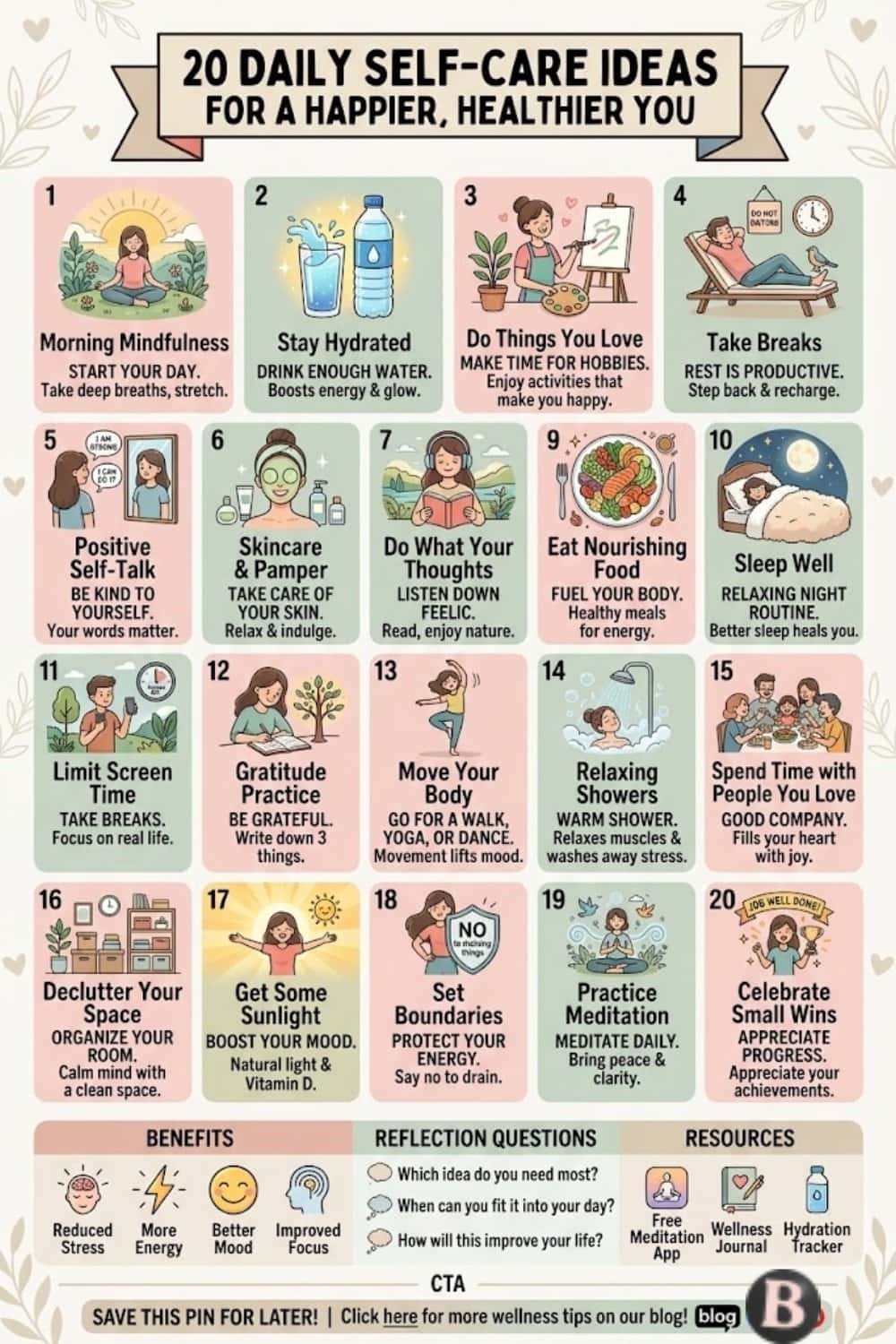
True wellness isn’t about grand gestures; it’s about the small, consistent actions you take every single day. Based on the ultimate daily self-care ideas framework, here are practical ways to nourish your mind, body, and soul.

Taking a few deep breaths, stretching, or sitting in silence sets a calm baseline for your nervous system. Do this the very second you wake up, before touching your phone.
Sit on the edge of your bed, close your eyes, and inhale deeply for four counts, hold for four, and exhale for four. Start your morning in total peace before checking notifications or diving into work tasks.

Drink fresh water consistently throughout the course of your day. Keep an aesthetically pleasing 1-litre water bottle at your workspace and sip regularly.
Adequate hydration boosts your physical energy, improves cognitive focus, and gives your skin a natural glow. Continuously from morning to night, starting with a large glass right after waking up.

Making time for activities that make your heart happy restores your creative energy and reminds you that life is meant to be enjoyed. During your afternoon lunch window or as an evening unwind session.
Intentionally carve out non-negotiable time for personal passions and hobbies. Spend 20 minutes painting, reading fiction, gardening, or baking your favourite treats.

Rest is productive; taking short pauses prevents deep mental burnout and allows your brain to recharge. Step away from productivity obligations to rest without feeling self-critical.
Set a timer, step away from your desk, stretch, and breathe quietly for five minutes. Every 90 minutes during intense work or study sessions.

Your inner words shape your self-worth; replacing harsh self-criticism with supportive phrases builds internal confidence. Intentionally speak to yourself with compassion, respect, and kindness.
Look in the mirror and say: “I am doing the best I can, and that is more than enough.” Whenever you make a mistake or catch yourself falling into negative thinking. For more motivation, check my Post On Affirmation for Confidence to Transform Your Self-Belief

A simple skincare ritual acts as an immediate mood booster and grounds you in physical self-love. Giving your skin and body delicate, attentive daily care.
Cleanse your face, apply a hydrating serum, layer moisturiser, and smooth on sunscreen every morning. During your morning wake-up routine and evening wind-down.

Listening to favourite tunes, reading a comforting book, or stepping into nature lowers cortisol levels. Engaging in soothing sensory experiences can quiet your overactive mind.
Put on noise-cancelling headphones, play ambient acoustic tracks, and sip warm herbal tea. During high-stress moments or late-afternoon energy slumps.

Externalising your mental clutter clears your head, processes complex emotions, and reduces anxiety. Write down your innermost feelings, worries, and daily reflections on paper.
Write one full page of unfiltered, stream-of-consciousness thoughts in a notebook. Right before bed or during your morning coffee window.

Real food stabilises blood sugar, improves digestion, and enhances long-term emotional well-being. Fuel your body with whole, nutrient-dense ingredients that support real energy.
Plate a balanced meal featuring lean protein, healthy fats, and a colourful mix of fresh fruits and vegetables. Across all major daily meals, ensure you never skip breakfast.

Good sleep resets cellular health, sharpens memory, and keeps your mood balanced. Prioritise consistent, high-quality nightly rest to heal your body and mind.
Aim for 7–8 hours of sleep, turn off screens 60 minutes prior, and keep your room cool and dark. Establishing a fixed bedtime every night.

Disconnecting from digital noise reduces social comparison and allows you to focus on real life. Take intentional breaks from social media feeds and digital screens.
Put your smartphone on “Do Not Disturb” mode and leave it in another room while relaxing. During dinner time and in the hour before falling asleep.

Appreciating small blessings shifts your psychological focus away from lack and toward abundance. Actively recognising and appreciating the positive details in your life.
Jot down three specific items you are thankful for (e.g., “The warm sun on my face this morning”). Every morning or directly before closing your eyes at night.

Physical movement releases mood-boosting endorphins, strengthens muscles, and relieves tension. Engaging in daily physical movement that feels enjoyable rather than punishing.
Go for a 20-minute walk outdoors, do a light yoga flow, or dance to your favourite playlist. Morning or early evening.

Warm water relaxes tight muscles and washes away the physical and mental stress of the day. Turning your daily wash routine into a calming hydrotherapy reset.
Take a warm, refreshing shower, dim the bathroom lighting, and use your favourite fragrant body cleanser. At night to signal to your body that it is time to unwind.

Good company fills your heart with positivity, joy, and a deep sense of belonging. Nurture relationships with friends and family who lift you up.
Schedule a distraction-free lunch date or call a dear friend just to catch up on life. Weekly coffee dates, family dinners, or phone calls.

A clean, organised environment creates a peaceful mind and eliminates spatial anxiety. Organise your immediate living and working environment.
Clear your desk workspace, make your bed every morning, and tidy up room clutter. Daily micro-cleans or weekly reset sessions.

Sunlight triggers natural Vitamin D synthesis and helps align your circadian rhythm for better sleep. Step outside to absorb natural morning or early afternoon light.
Drink your morning water or tea near a sunny window, or take a 10-minute stroll outside. Within the first two hours of waking up.

Establishing healthy boundaries prevents resentment, lowers stress, and protects your emotional energy. Protect your personal time, mental health, and energy by saying no to draining demands.
Politely decline extra work commitments by saying: “I don’t have the capacity for this right now, but thank you for thinking of me.” Whenever a request conflicts with your well-being or schedule capacity.

Even a few short minutes of daily meditation bring deep inner peace, mental clarity, and focus. Dedicating quiet minutes to observation and stillness.
Use a guided breathing app or sit quietly, focusing entirely on your breath for 5 minutes. Midday when feeling stressed, or right before sleep.

Appreciating your daily progress builds internal motivation and reinforces self-efficacy. Acknowledge and validate your everyday efforts, no matter how tiny.
Write down three tasks you finished today, like drinking your water or making your bed, and congratulate yourself! At the end of every workday.
To make self-care simple and actionable, break your habits down into category buckets. Use this structured of Self-Care Checklist to keep track of your progress throughout the day

If you want to deepen your understanding of daily habits, self-compassion, and stress management, here are 5 must-read books complete with links across the US, UK, and Canada:
Self-care doesn’t require hours of free time; it is about “habit-stacking” tiny micro-habits into your existing routine. You can practice gratitude while brewing your morning tea, drink a glass of water right when you wake up, or take five deep breaths before starting your car.
Not at all! Self-care is self-preservation. As the golden rule states: “You can’t pour from an empty cup, take care of yourself first.” When you are well-rested, mentally clear, and healthy, you show up much better for the people you love.
Self-care consists of intentional choices that support your long-term health, mental clarity, and peace (like eating nourishing food, going to bed on time, and setting boundaries). Self-indulgence often involves temporary fixes (like binge-watching TV or overspending) that offer quick comfort but leave you feeling drained later.
While building habits takes time, focusing on consistency over perfection is key. Trying one or two small items from your checklist every day for 30 days will help those actions become automatic, effortless parts of your daily routine.
Remember that progress is better than perfection! Strip your checklist down to the absolute basics: drink one glass of water, step outside for 2 minutes of sunlight, and go to bed early. Be kind to yourself and give yourself grace on hard days.
At the end of the day, adopting a Daily Self-Care Routine isn’t about trying to live an ultra-flawless life, it is simply about choosing to honour yourself every single day! Remind yourself that you deserve time, love, and care, not just when you are exhausted, but every single day. Pick two or three tiny items from this checklist to start tomorrow morning, and remember that progress is always better than perfection. You are doing so much better than you think! If you are ready to keep organising your daily life for peace and productivity, make sure to read my other post on [How to Solve Almost Any Problem: 12 Easy Ways To Solve Problems In Life]. Leave a comment below with your favourite self-care habit, and don’t forget to pin this article to your favourite Pinterest boards so you can revisit your checklist whenever you need a recharge!