What are the best ways to solve life problems?
Learning Easy Ways To Solve Problems In Life involves identifying root challenges and applying practical, targeted solutions. A simple framework includes: refocusing priorities during financial tightness, taking life ownership for health, trying new hobbies to beat monotony, tackling fears incrementally, helping others to rediscover meaning, re-centering after relationship loss, seeking advice for doubt, using accountability for procrastination, leveraging task management apps for disorganisation, using 30-day challenges for discipline, performing random acts of kindness for connection, and decluttering your environment for mental clarity. Mastering these strategies alongside foundational basic skills in life helps build lasting resilience.
Two years ago, my life felt like a massive wall of tumbling dominoes. I had just lost a major project, my apartment looked like a tornado had hit it, my daily schedule was completely disorganised, and every single decision felt heavier than a lead brick. I sat on my living room floor surrounded by laundry piles and sticky notes, completely paralysed by the sheer volume of things going wrong at once. I kept waiting for some magical moment of divine intervention or a sudden change, but nothing changed until I decided to take a step back and break down my chaos into simple, manageable pieces. I realised that life’s toughest obstacles don’t require complex mathematical formulas; they just require a clear, step-by-step strategy. That turning point inspired this comprehensive guide on Easy Ways To Solve Problems In Life. Whether you are dealing with financial stress, relationship heartbreak, or everyday overwhelm, these 12 practical actions will help you clear the fog and regain control!
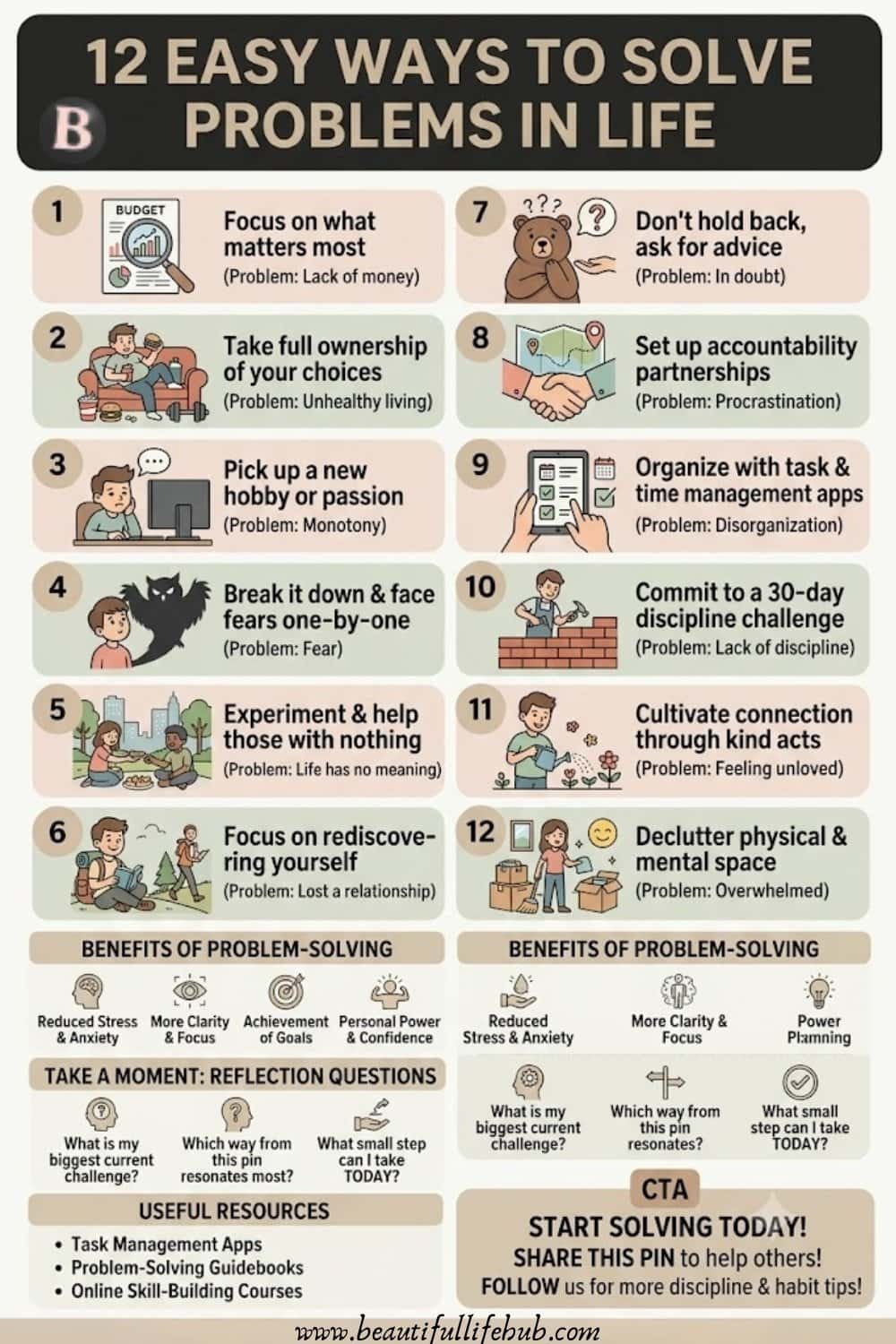
Navigating life challenges becomes significantly easier when you match every specific problem with a proven, actionable fix. Based on the ultimate problem-solving framework, here is your breakdown of the 12 targeted strategies to overcome obstacles.

Shifting your attention to essential priorities removes the pressure of lifestyle inflation and helps you cut out unnecessary expenses without feeling deprived. Re-evaluate your core spending habits and consumer values when finances get tight.
Sit down with your bank statements, cancel unused digital subscriptions, and write out your top three non-negotiable living expenses. When money stress feels overwhelming or when you are trying to build an emergency savings fund.

Taking full ownership empowers you to replace bad habits with positive health routines instead of waiting for external circumstances to change. Stopping the habit of making excuses and stepping into active personal accountability for your body and mind.
Schedule your weekly grocery trips in advance, buy whole foods, and commit to moving your body for 30 minutes every day. When you feel constantly sluggish, low energy, or disconnected from your physical health goals.

Trying something new stimulates your brain, triggers dopamine release, and brings a sense of wonder back into your daily schedule. Breaking up the dull routine of daily life by introducing fresh, creative activities.
Sign up for a weekend pottery workshop, learn a musical instrument, or start an indoor garden. When your days feel repetitive, predictable, or like you are living on autopilot.

Facing small fears systematically desensitises your nervous system and builds steady confidence. Dismantling massive, intimidating goals into micro-steps that your brain can process without panicking.
Write down your biggest fear on paper, divide it into five tiny steps, and complete just step one today. When anxiety paralyses you from launching a project, starting a business, or making a big career pivot.

Shift your focus from getting to giving; serving others instantly puts your own struggles into perspective and fills your life with genuine meaning. Reconnecting with deep life purpose through selfless service and active exploration.
Volunteer at a local shelter on weekends or mentor someone who needs guidance in your field. When you feel hollow, empty, or disconnected from the world around you.

Refocusing energy back on your own growth helps heal emotional wounds and reminds you of your independent value. Turning heartbreak or social distance into an opportunity for personal rediscovery.
Take yourself on solo dates, pick up old interests you abandoned during the relationship, and journal your personal goals. Follow a painful breakup, a drifting friendship, or a major life transition.

External perspectives remove your subjective blind spots and stop you from overthinking in isolation. Reach out to trusted mentors, counsellors, or experienced peers when you lack clarity.
Invite a mentor out for coffee and prepare three specific, thoughtful questions about your current dilemma. When you are standing at a complex career crossroads or facing a tough life decision.

Social accountability creates healthy pressure, making it much harder to slide into lazy excuses. Involving another person to hold you responsible for keeping your promises.
Find a goal-oriented friend and schedule a quick 5-minute daily check-in call to report your progress. When you repeatedly push important deadlines down the road.

Offloading your mental reminders into external systems reduces cognitive load and keeps your workflow seamless. Utilise modern digital tools to store, structure, and automate your daily tasks.
Download digital organisation apps (like Todoist, Notion, or Google Calendar) and schedule every task with reminders. When you constantly forget appointments, miss deadlines, or feel mentally scattered.

A 30-day window is long enough to rewire your brain’s routines without feeling like an intimidating forever commitment. Setting a strict, time-bound parameter helps build a new constructive habit.
Pick one single target habit (e.g., no sugar or reading 10 pages daily) and cross off every completed day on a wall calendar. When you struggle to stay consistent with workouts, reading, or diet plans.

Kindness creates an immediate feedback loop of warm connection, reminding you of the good in humanity. Intentionally sending out love and kindness to others when you feel isolated.
Pay for a stranger’s coffee, leave an encouraging note for a coworker, or text a genuine compliment to a friend. When you feel lonely, forgotten, or detached from your community.

Physical clutter constantly competes for your brain’s attention; clearing your space immediately quiets mental chaos. Cleaning up your physical surroundings restores internal mental calm.
Set a timer for 15 minutes, clear your immediate work desk, throw away trash, and make your bed. When your brain feels overcrowded and you don’t know where to start working.
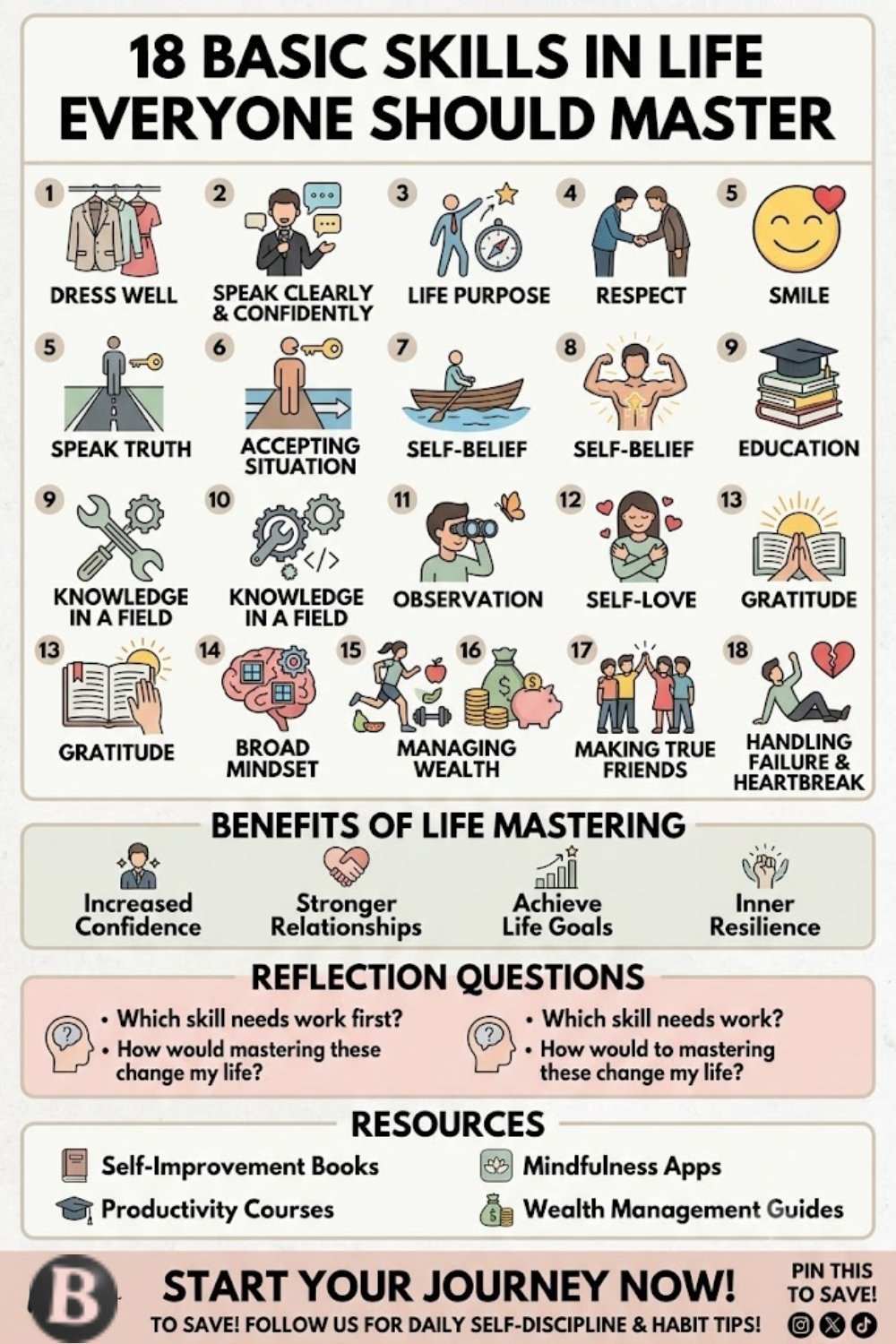
To successfully apply the 12 Easy Ways To Solve Problems In Life, you need a strong foundation of core personal habits. Developing these essential basic skills in life helps prevent major obstacles before they even start:
If you want to dive deeper into mastering analytical thinking, overcoming obstacles, and organizing your goals, here are 5 must-read books with direct links to pick up across the US, UK, and Canada:
When an obstacle feels too big to handle, start by decluttering your immediate physical space and grabbing a piece of paper. Write down the problem, break it down into micro-tasks, and focus entirely on completing just one tiny action step to gain immediate momentum.
If you have been stuck in an overthinking loop for several days without making progress, it is time to ask for advice. Reaching out to a trusted friend, mentor, or professional brings fresh perspective and stops you from wasting valuable time.
Absolutely! Mastering basic skills in life, like taking care of your health, practising self-love, managing wealth, and building true friendships, creates a solid protective buffer that absorbs life shocks.
Stop relying purely on short-term motivation and commit to a structured “30-day challenge” with a partner. Setting up an accountability partnership ensures you stay on track even on the days you don’t feel like showing up.
Practice radical acceptance, one of the key basic skills in life. Focus your energy entirely on controlling your attitude, taking care of your health, and taking small daily steps within your control until the situation evolves.
At the end of the day, learning Easy Ways To Solve Problems In Life isn’t about creating a perfect, stress-free life, because challenges are a natural part of being human! It is simply about equipping yourself with the right toolbox so that when life throws a curveball, you feel calm, capable, and ready to respond. Take a deep breath, pick just one strategy from this list to test out today, and trust your ability to navigate whatever comes your way. You are far more resilient than you realise, and every single obstacle is just an opportunity to grow stronger! If you are ready to keep organising your personal life for maximum success, definitely check out my other guide on [How to Build Self-Discipline: 10 Simple Habits to Master Self-Control]. Drop your favourite problem-solving tip in the comments below, and don’t forget to save and pin this post to your favourite Pinterest boards for daily motivation!