

Setting up a safe baby room involves key steps like choosing a firm crib mattress, keeping the sleep area bare, anchoring furniture, and covering electrical outlets. These tips help prevent common hazards such as falls, strangulation, and suffocation, ensuring a secure space for your newborn.
New parents-to-be! Let’s chat about making your baby’s room a cozy yet super-safe haven, because nothing beats that peace of mind when your little one is snoozing soundly. I remember when I was expecting my first, I turned our spare room into what I thought was the perfect nursery, complete with cute mobiles and fluffy blankets. But one night, after reading a story about a close call with window cords, I panicked and spent the whole weekend rearranging everything.
It was a wake-up call that taught me safety isn’t just about looks; it’s about smart choices that protect those tiny explorers. Now, as a parent who’s been through the trenches, I’m excited to share these tips with you in a way that’s easy to follow and fun to implement. Let’s dive in and make your baby’s room a worry-free zone!
Here are the top 10 essential baby room safety tips, broken down with descriptions, explanations, why they work, and how to put them into action. Think of this as your go-to checklist for a secure nursery.

Opt for a crib that meets current safety standards with a firm, snug-fitting mattress. Cribs should have slats no more than 2 3/8 inches apart to prevent head entrapment, and the mattress must be flat without gaps. Why it works: This setup reduces the risks of suffocation and SIDS by providing a stable sleep surface. How to recreate: Check for JPMA certification; place the baby on their back for sleep, feet to the foot of the crib.
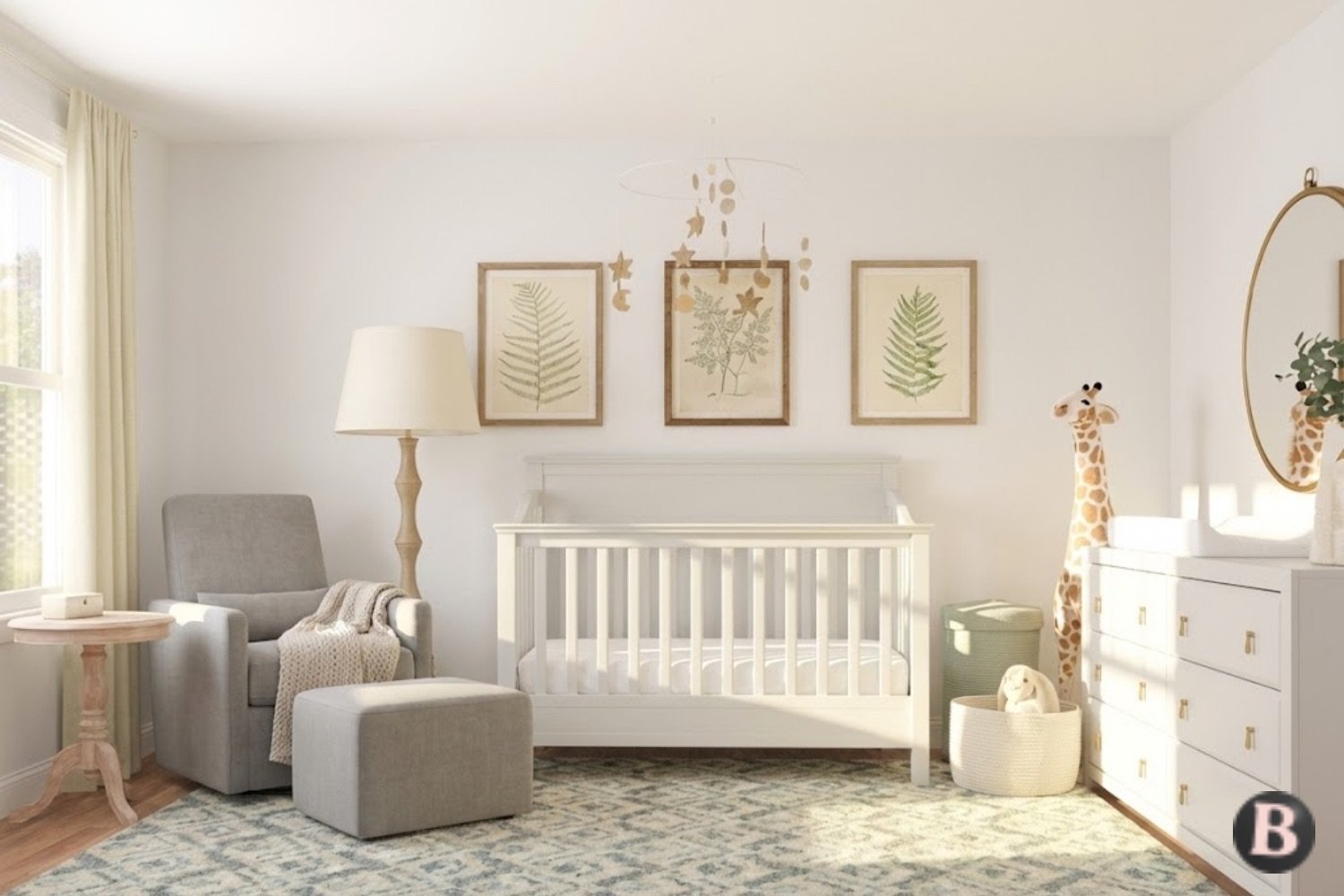
Avoid pillows, blankets, bumpers, toys, or stuffed animals in the crib. These items can cause suffocation or strangulation if the baby rolls into them. Why it works: A bare crib follows AAP guidelines for safe sleep, cutting SIDS risk by up to 50%. How to recreate: Use a fitted sheet only; for warmth, dress the baby in a sleep sack instead of loose blankets.

You can place the crib away from windows, heaters, and walls with cords. Cords from blinds or curtains pose a strangulation hazard, while windows can lead to drafts or falls. Why it works: It minimises access to dangerous items, preventing accidents that account for many nursery injuries. How to recreate: Centre the crib in the room; use cord shorteners or winders for any nearby blinds.

Secure dressers, bookshelves, and changing tables to the wall. As babies grow, they can pull on furniture, causing tip-overs. Why it works: Anchoring prevents crushing injuries, which affect thousands of kids yearly. How to recreate: Use anti-tip straps or brackets; install them per manufacturer instructions.
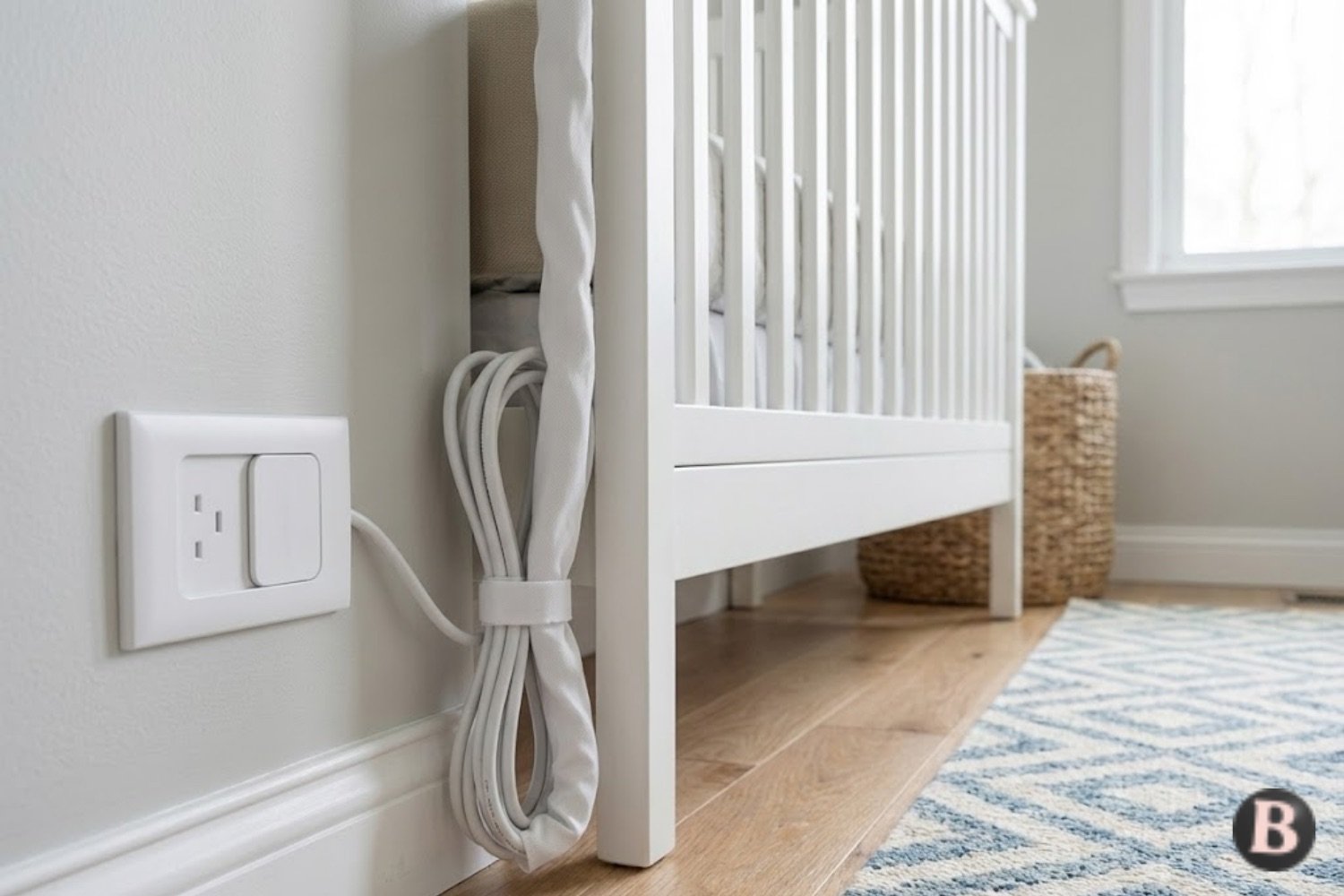
Install outlet covers and keep cords out of reach. Exposed outlets invite poking, leading to shocks, while cords can be choking hazards. Why it works: Simple covers eliminate curiosity-driven risks in a babyproofed space. How to recreate: Use sliding or tamper-resistant covers; bundle cords behind furniture.
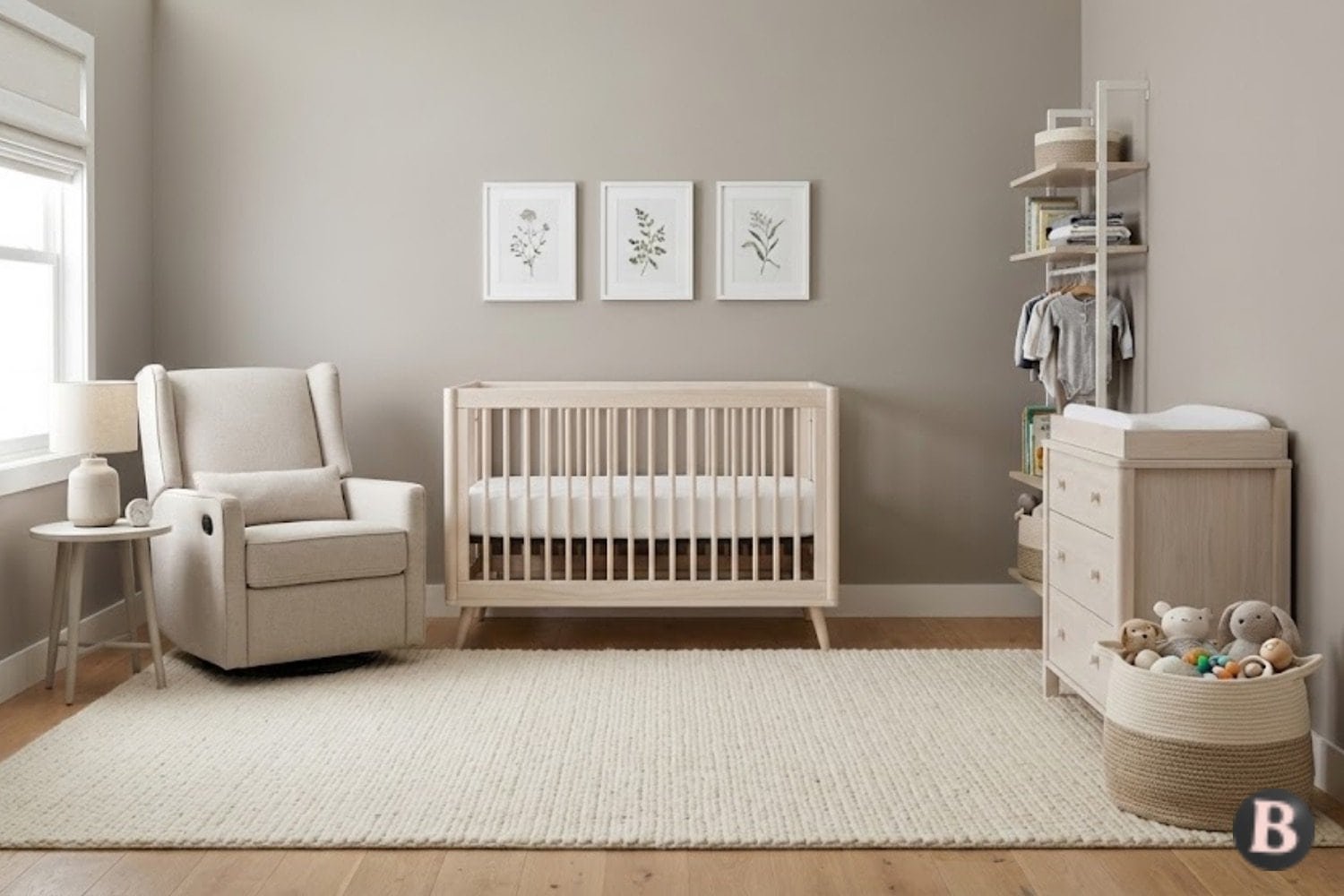
Skip fluffy comforters, mobiles with strings, and small toys. These can become entrapment or choking risks as the baby moves. Why it works: Keeping things minimal aligns with safe sleep practices, promoting better rest. How to recreate: Choose wall-mounted decor; store toys in bins outside the crib.

Place detectors in or near the nursery. Early alerts to fire or gas can save lives in emergencies. Why it works: They provide critical time to evacuate, essential in a home with infants. How to recreate: Test monthly; position at ceiling height for best detection.

Cover sharp edges on furniture with bumpers. As babies crawl, bumps and bruises from corners are common. Why it works: Padding softens impacts, reducing injury severity. How to recreate: Apply foam guards; check for secure fit regularly.

Keep floors clear and use vertical storage. Clutter can cause trips or hide small choking hazards. Why it works: A tidy space makes supervision easier and safer. How to recreate: Mount shelves high; use baskets for quick pickups.
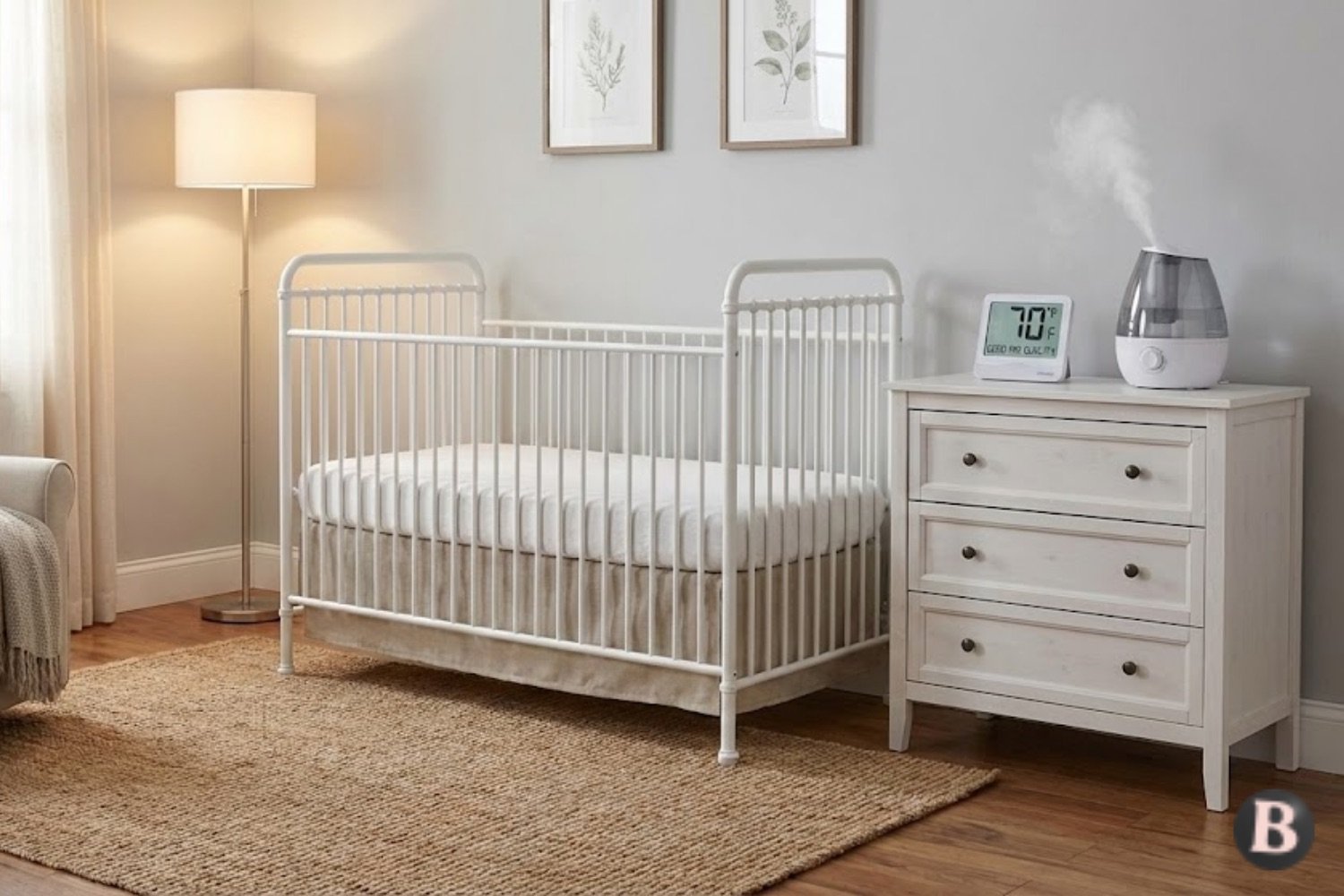
Keep the room between 68-72°F; use a humidifier if needed. Overheating increases SIDS risk; good air prevents respiratory issues. Why it works: Optimal conditions support healthy sleep and development. How to recreate: Use a thermometer; avoid drafts and ensure ventilation.
Shopping for safe, quality items? Here are top platforms tailored for US, UK, and Canada audiences, with links to get you started.
| Platform | Best For | US Link | UK Link | Canada Link |
|---|---|---|---|---|
| BuyBuyBaby | Wide selection of cribs, strollers, and safety gear | buybuybaby.com | N/A | N/A |
| Babies R Us | Affordable nursery furniture and essentials | babiesrus.com | N/A | babiesrus.ca |
| Pottery Barn Kids | Stylish decor and durable furniture | potterybarnkids.com | potterybarn.co.uk | potterybarnkids.ca |
| Albee Baby | Discounted car seats, cribs, and activity items | albeebaby.com | N/A | N/A |
| The Nursery Store / Pehr | Organic clothing, decor, and furniture | N/A | thenurserystore.com | pehr.com |
These sites offer reliable, safety-certified products. Always check reviews for your region!
Keeping your nursery furniture in top shape ensures longevity and safety. Wipe surfaces weekly with a soft cloth and baby-safe cleaner like diluted vinegar or Dr. Bronner’s. Avoid harsh chemicals that could irritate skin. Protect from direct sunlight to prevent fading and warping; rotate items if needed. For fabrics, spot-clean stains immediately and air-dry. Check screws and hardware monthly for tightness, and dust with a microfiber cloth to keep the air clean. In humid areas (common in the UK or coastal Canada), use a dehumidifier to prevent mould. These habits not only maintain aesthetics but also uphold safety standards.

From research, key hazards include loose cords, unstable furniture, and soft bedding. Always scan for small objects like buttons or pins that could choke, and keep plastic bags far away. Overcrowded spaces invite trips, so prioritise open layouts. In older homes (prevalent in UK and Canada), test for lead paint on antique pieces. Addressing these proactively creates a truly secure environment.
Wait until your baby is at least 12 months old to introduce blankets or pillows, as they pose suffocation risks earlier. Stick to sleep sacks for warmth in the meantime to maintain a safe sleep environment. This follows AAP recommendations to reduce SIDS.
Press down firmly; if it doesn’t indent easily and snaps back, it’s suitable. Avoid soft or memory foam options, as they can create unsafe gaps or hinder breathing. Test by placing your hand in the centre; it should feel solid.
No, crib bumpers are not recommended as they can lead to entrapment or suffocation. Modern guidelines advise against them entirely for airflow and safety. Opt for breathable mesh alternatives if needed, but bare is best.
Always place babies on their backs for every sleep to minimise SIDS risk. This position keeps airways open and is endorsed by health experts. Once they can roll independently, it’s okay if they shift, but start them on their back.
Inspect weekly or after any changes, like adding new toys. Look for loose parts, cords, or clutter that could emerge as the baby grows. Regular checks ensure ongoing safety as your child’s mobility increases.
Whew, setting up a safe baby room might feel overwhelming at first, but trust me, it’s one of the best gifts you can give your little one. From my own experience, that initial panic turned into confidence once I implemented these tips, and now I look back with a smile at how it all came together. Remember, safety evolves as your baby grows, so stay vigilant and enjoy the journey. If you’re loving these ideas, check out my post on Newborn Baby Room Decor Ideas for ways to add style without skimping on security. Or dive into Kids Bedroom Design Ideas for when they grow out of the stage of always monitoring them. You’ve got this. Here’s to creating memories in a space that’s as safe as it is special. Drop a comment below if you have your own tips; I’d love to hear them!